
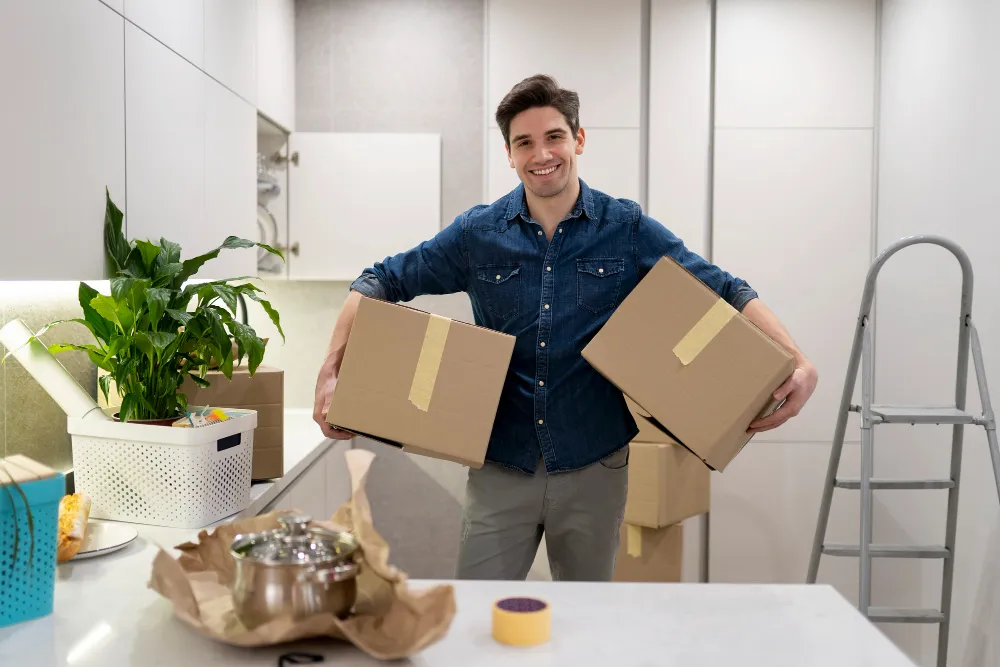
How to pack kitchen items safely for moving – the room that breaks hearts and budgets.
Your kitchen has more fragile, heavy, and oddly-shaped items than every other room combined. I’ve seen people lose AED 1,000 worth of dishes because they packed them like books.
Here’s exactly how professionals do it. No shortcuts, no “it’ll be fine” thinking.
The Kitchen Reality Check
Your kitchen wants to destroy your moving budget.
- Everything is either heavy or fragile (often both)
- Weird shapes don’t fit in standard boxes
- Liquids can leak and ruin everything
- Small items disappear into packing chaos
Professional movers charge extra for kitchens. There’s a reason for that.
The Strategic Packing Order
Most people pack randomly. That’s how things get broken.
Pack in this order:
- Non-essential appliances (bread maker, fancy gadgets)
- Canned and dry goods (heaviest items)
- Everyday dishes (you’ll use these until last day)
- Cookware and utensils
- Fragile/valuable items (save for when you’re fresh)
- Liquids and perishables (final day only)
The Small Box Rule (Non-Negotiable)
Kitchen items go in small boxes. Period.
I don’t care if you have to use 15 small boxes instead of 5 large ones. Heavy items in large boxes = injured backs and broken dishes.
Small box limits:
- Maximum 20kg (44lbs) per box
- If you can’t lift it easily, it’s too heavy
- Better to have 10 manageable boxes than 3 back-breaking ones
Dish Packing: The Professional Method
Plates (the spine method):
- Stand plates vertically like records in a record collection
- Wrap each plate individually in packing paper
- Place paper between each plate for extra protection
- Fill gaps with crumpled paper
Why vertical works: Plates are stronger on their edges than flat. This is how china shops ship dishes.
Bowls (the nesting method):
- Wrap each bowl separately
- Nest similar sizes with paper between
- Fill the nested stack with crumpled paper
- Pack nested stacks snugly in boxes
Glassware: The Stuff-and-Wrap Technique
For drinking glasses:
- Stuff glass with packing paper first
- Wrap entire glass in paper
- Add bubble wrap layer for valuable glasses
- Pack in small boxes with dividers
Wine glasses (the professional secret):
- Pack stems separately from bowls if possible
- Use cell dividers or make your own
- Never pack more than 12 wine glasses per box
Cookware: The Weight Distribution Game
Pots and pans:
- Nest similar sizes with paper between
- Pack handles down to save space
- Use pans as containers for small utensils
- Distribute weight across multiple boxes
Heavy appliances:
- Use original boxes if you have them
- Pad well if using regular boxes
- Keep boxes small – one appliance per box maximum
- Label clearly with contents and “HEAVY”
The Knife and Sharp Objects Protocol
Kitchen knives:
- Individual blade guards or wrap in cardboard
- Bundle together and tape securely
- Label box “SHARP OBJECTS” clearly
- Pack in accessible location for unpacking safety
Other sharp items:
- Can openers, graters, food processors blades
- Same principle – protect the sharp edges
- Group together for easier unpacking
Liquid and Chemical Safety
What can be moved:
- Sealed, unopened bottles under 500ml
- Cooking oils in original containers
- Vinegar and cooking wine
What cannot be moved by professionals:
- Cleaning chemicals (most moving companies refuse these)
- Propane tanks (gas cookers)
- Opened perishables
- Homemade preserves (might explode under pressure)
Pack liquids separately. If they leak, they won’t ruin your dishes.
Small Kitchen Items: The Chaos Controllers
Utensils and gadgets:
- Group by function (baking tools, cooking utensils)
- Use small containers or bags within boxes
- Fill empty spaces in appliance boxes
- Label clearly – small items are easy to lose
Spice organization:
- Check expiry dates (don’t move expired spices)
- Secure lids with tape
- Pack in rigid containers
- Consider this your chance to organize your spice collection
The Dubai Kitchen Considerations
Heat sensitivity:
- Chocolate and candy will melt in hot trucks
- Candles will warp or melt
- Plastic containers can warp in extreme heat
- Pack these items in insulated containers or car transport
Humidity issues:
- Dry goods can absorb moisture
- Salt and sugar can clump
- Use airtight containers for important pantry items
The First Day Kitchen Box
Pack one box of kitchen essentials for immediate use:
- Kettle and mugs
- Basic cutlery
- One pot and one pan
- Can opener
- Coffee/tea supplies
- Paper plates and cups (temporary solution)
- Basic cleaning supplies
This box travels with you, not on the truck.
Appliance Preparation
Refrigerator:
- Defrost completely 48 hours before
- Clean thoroughly and dry
- Secure or remove shelves and drawers
- Tape doors closed with moving tape
Dishwasher:
- Run empty cycle to clear water
- Secure dish racks
- Check for loose hoses
Oven and hob:
- Clean thoroughly (movers can refuse dirty appliances)
- Remove racks and pack separately
- Disconnect gas safely (professional job)
Common Kitchen Packing Disasters
Disaster 1: Packing dishes flat in large boxes Result: Broken plates and injured backs
Disaster 2: Not securing liquid containers Result: Everything sticky and potentially ruined
Disaster 3: Mixing heavy and fragile items Result: Crushed delicate items
Disaster 4: Forgetting to label fragile boxes Result: Movers treat them like books
The Professional Time Investment
Average kitchen packing times:
- Small kitchen (galley): 4-6 hours
- Medium kitchen: 6-8 hours
- Large kitchen: 8-12 hours
Don’t rush this room. Mistakes cost more than extra time.
Money-Saving Kitchen Tips
Before you pack:
- Use up perishables in the weeks before moving
- Donate unused appliances instead of moving them
- Sell valuable items you don’t actually use
- Check expiry dates on everything
Pack smartly:
- Use towels as padding for non-fragile items
- Fill empty spaces in appliance boxes with utensils
- Repurpose food containers as packing containers
FAQs
Q: Should I pack dishes in towels instead of paper? A: Towels work for non-valuable everyday dishes. Use proper packing materials for good china.
Q: Can I pack cleaning supplies with dishes? A: Never. Chemicals can leak and contaminate food items. Pack separately.
Q: How do I pack my expensive knife set? A: Individual blade guards, then in a rigid container. Consider carrying valuable knives yourself.
Q: What’s the maximum weight for a kitchen box? A: 20kg maximum. If you can’t lift it easily, it’s too heavy.
Q: Should I disassemble my food processor? A: Yes, remove blades and pack separately. Secure any loose parts.
How to pack kitchen items safely for moving is about respecting the fact that this room contains your most breakable and expensive items, then treating them accordingly.