How to label boxes efficiently when packing for move – because “miscellaneous stuff” isn’t helpful when you’re looking for your toothbrush at midnight.
I’ve made every labeling mistake possible. Boxes marked “kitchen” with random bedroom items inside. Red marker when I meant to use black. No system whatsoever.
Here’s the labeling system that actually works when you’re stressed, tired, and just want to find your stuff.
Why Most People’s Labeling Systems Fail
Common mistakes:
- Too vague (“bedroom stuff”)
- Too detailed (novel-length descriptions)
- Inconsistent (different systems for different boxes)
- Poor visibility (tiny writing, wrong marker color)
The result: You’re opening 12 boxes to find one item. Movers put boxes in wrong rooms. Unpacking takes forever.
The Professional Three-Part System
Every label needs three elements:
- Destination room (where it goes)
- Priority level (how quickly you need it)
- Contents summary (what’s actually inside)
Example: “KITCHEN – Priority 1 – Coffee supplies, mugs, kettle”
Why this works: Movers know exactly where boxes go. You know which boxes to unpack first. You can find specific items without opening everything.
The Color-Coding System That Actually Works
Use colored markers strategically:
- Black marker – room name and contents
- Red marker – FRAGILE and priority items
- Blue marker – room destination
- Green marker – “OPEN FIRST” boxes
Don’t overthink colors. Simple system beats complicated system every time.
Room Labeling: Be Specific
Bad labels:
- “Bedroom” (which bedroom?)
- “Bathroom” (which bathroom?)
- “Storage” (where in your new place?)
Good labels:
- “Master Bedroom”
- “Kids Bathroom”
- “Garage Storage”
- “Kitchen – Pantry Items”
Include new home layout details: “Second Floor Master Bedroom” “Downstairs Guest Toilet” “Basement Storage Room”
The Priority System (Game Changer)
Priority 1 – Open immediately:
- Survival boxes (basic toiletries, change of clothes)
- Essential kitchen (kettle, mugs, basic cutlery)
- Kids’ comfort items
- Pet supplies
Priority 2 – Open within first week:
- Remaining kitchen essentials
- Work clothes and materials
- Basic home setup items
Priority 3 – Open when you have time:
- Decorative items
- Books and entertainment
- Seasonal clothes
- Storage items
The Contents Description Sweet Spot
Too vague: “Kitchen stuff” Too detailed: “Blue ceramic bowls from IKEA, three wooden spoons, the red spatula from the drawer next to the sink…” Just right: “Cooking utensils and mixing bowls”
Good content descriptions:
- “Winter clothes – coats and jumpers”
- “Books – fiction and cookbooks”
- “Electronics – cables and chargers”
- “Bathroom – towels and toiletries”
Box Labeling Placement Strategy
Label THREE sides of every box:
- Top (for when boxes are stacked)
- Front long side (for when boxes are on shelves)
- End (for when boxes are packed tightly together)
Use large, clear writing. Movers need to read labels from 6 feet away while carrying heavy boxes.
The Inventory List System
Keep a master list: Box 1: Kitchen – Priority 1 – Coffee supplies, mugs, kettle Box 2: Master Bedroom – Priority 2 – Work clothes, shirts, trousers Box 3: Living Room – Priority 3 – Books, decorative items
Why this helps: You can find specific items without reading every box. You know if boxes go missing. Insurance claims are easier with detailed lists.
Dubai-Specific Labeling Considerations
Heat sensitivity labels: Add “KEEP COOL” to boxes containing:
- Electronics
- Candles or wax items
- Chocolate or heat-sensitive food
- Photography equipment
Humidity protection: “MOISTURE SENSITIVE” for:
- Books and paper items
- Electronics
- Fabric items
Special Handling Labels
Essential labels for movers:
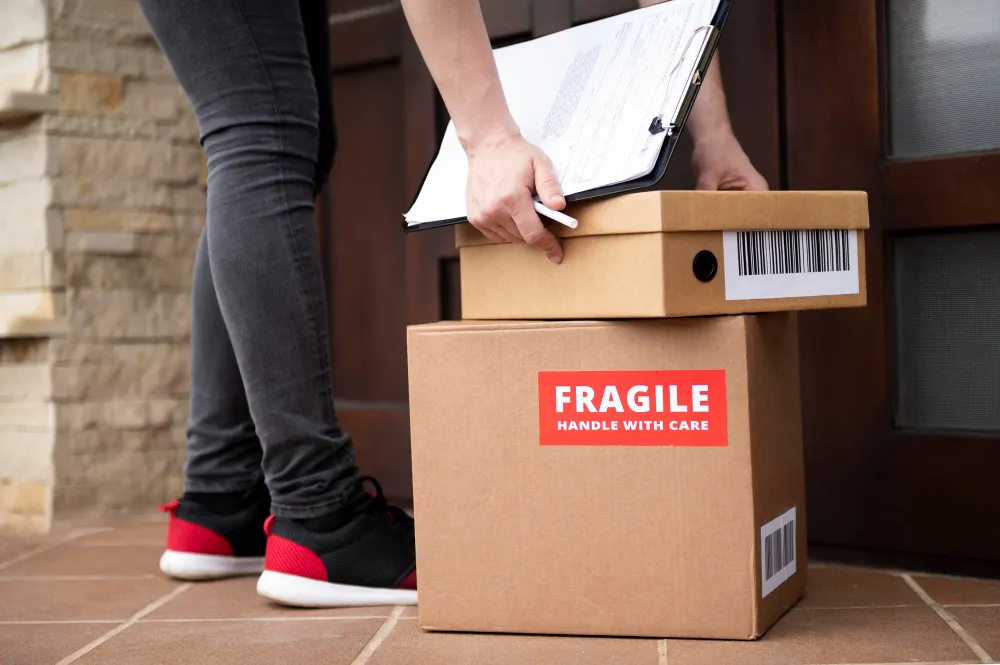
- “FRAGILE” – in large red letters
- “HEAVY” – warn movers about weight
- “THIS WAY UP” – with arrows for electronics
- “OPEN FIRST” – for immediate necessities
Professional tip: Use actual warning labels/stickers when possible. They’re more visible than handwritten labels.
The Numbering System
Sequential numbering:
- Box 1, Box 2, Box 3… (simple tracking)
- K1, K2, K3 for kitchen boxes
- BR1, BR2, BR3 for bedroom boxes
Benefits: Easy to check all boxes arrived. Quick reference for inventory list. Helps movers count boxes.
Labeling Materials That Work
Essential supplies:
- Permanent markers – Sharpie or equivalent
- Colored markers – for coding system
- Pre-made labels – for common items (FRAGILE, etc.)
- Clear packing tape – to protect labels from moisture
Pro tip: Buy extra markers. They run out faster than you think, and you need consistent writing quality.
The “Essential Box” Labeling Strategy
Mark essential boxes differently: Use bright colored tape around the entire box. Write “OPEN FIRST” in large letters. Keep these boxes accessible in the truck.
Essential box contents:
- Cleaning supplies for new home
- Basic tools for immediate needs
- First aid kit
- Snacks and drinks for moving day
- Phone chargers and electronics
Common Labeling Mistakes to Avoid
Mistake 1: Only labeling the top of boxes Solution: Label three sides of every box
Mistake 2: Using pencil or cheap markers Solution: Permanent markers only
Mistake 3: Being too cryptic with abbreviations Solution: Write clearly, spell out important words
Mistake 4: Not dating boxes Solution: Add packing date for insurance purposes
The Unpacking Strategy Labels
Create unpacking categories:
- “Week 1” – essential items
- “Month 1” – important but not urgent
- “When Settled” – decorative and non-essential
This helps you prioritize unpacking when you’re overwhelmed in your new home.
Digital Backup Strategy
Take photos of box labels: Before boxes get loaded on truck. If labels get damaged or smudged, you have backup. Helps with insurance claims if needed.
Use a simple app or phone notes to track: Box numbers and their contents. Which room they’re destined for. Priority levels.
FAQs
Q: Should I use a label maker instead of handwriting? A: Handwritten labels are faster and more flexible. Save label makers for permanent organizing.
Q: What if I run out of space to write everything? A: Use abbreviations for room names, but spell out contents clearly.
Q: How detailed should contents descriptions be? A: Detailed enough to find items without opening boxes, brief enough to write quickly.
Q: Should I put labels inside boxes too? A: Yes, especially for valuable items. External labels can get damaged or removed.
Q: What’s the most important thing to label clearly? A: “OPEN FIRST” boxes and fragile items. Everything else is secondary.
How to label boxes efficiently when packing for move is about creating a system you can follow consistently, even when you’re exhausted and running out of time.