
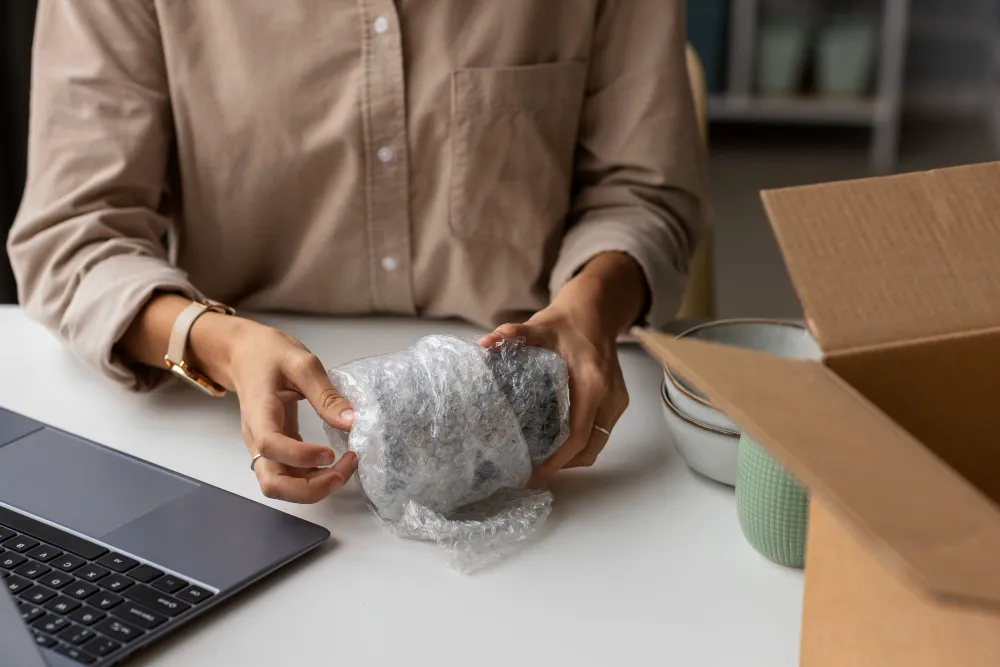
How much bubble wrap do I need for moving?
This question haunts every mover. Buy too little, and you’re making emergency runs to the shop. Buy too much, and you’ve got enough bubble wrap to protect a small country.
I’ve made both mistakes. Here’s exactly how to calculate what you actually need.
The Bubble Wrap Reality
Most online calculators are rubbish. They’re written by people selling bubble wrap. Surprise surprise, they always tell you to buy more.
Real talk: Quality matters more than quantity. Thick bubble wrap does more with less. Thin bubble wrap is almost useless.
The Professional Calculator Method
I learned this from a moving company owner in Dubai. He calculates bubble wrap by room, not by item count.
Kitchen: 2-3 rolls (most fragile items) Living room: 1-2 rolls (ornaments, electronics) Bedrooms: 1 roll per room (minimal fragiles) Home office: 1-2 rolls (computer equipment)
Base calculation for average 3-bedroom house: 6-8 rolls
Then adjust up or down based on your actual stuff.
The Item-Based Method (More Accurate)
Count your fragile items in categories:
Dishes and glassware:
- Plates: 2 feet of wrap per plate
- Glasses: 3 feet per glass
- Bowls: 1.5 feet per bowl
- Serving dishes: 4-5 feet each
Electronics:
- TV screens: 8-10 feet (double wrap)
- Computer monitors: 6-8 feet
- Speakers: 4-6 feet each
- Gaming consoles: 5-6 feet
Decorative items:
- Picture frames: 3-4 feet each
- Vases: 4-6 feet depending on size
- Ornaments: 2-3 feet each
Bubble Wrap Sizes and What They Actually Do
Small bubbles (1/8 inch):
- Best for: Delicate items, glasses, small electronics
- Coverage: More surface contact, better for smooth surfaces
Large bubbles (1/2 inch):
- Best for: Cushioning, filling space, large items
- Coverage: Better shock absorption, good for heavy items
Most people need small bubble wrap. Large bubble is mainly for filling empty space in boxes.
The Dubai Heat Factor
Dubai’s climate changes everything.
Hot trucks mean:
- Adhesive on bubble wrap can fail
- Plastic can become brittle
- Items expand and contract
Solution: Buy 20% more than calculated. Use it for double-wrapping temperature-sensitive items.
What You Don’t Need Bubble Wrap For
Stop wasting bubble wrap on:
- Books (they don’t break, just get heavy)
- Clothes (they’re already soft)
- Towels and bedding (natural padding)
- Tupperware (plastic containers are tough)
Use newspaper or packing paper instead. Save bubble wrap for actual fragiles.
The Roll Size Reality Check
Standard roll sizes:
- 12 inches x 25 feet (small roll)
- 12 inches x 100 feet (medium roll)
- 24 inches x 100 feet (large roll)
Cost per foot: Large rolls are always cheaper per foot. But only buy what you’ll actually use. Leftover bubble wrap takes up storage space.
Strategic Bubble Wrap Usage
Double wrap these items:
- Mirrors and glass
- Electronic screens
- Artwork
- Expensive ceramics
Single wrap is fine for:
- Everyday dishes
- Basic electronics
- Decorative items
- Small appliances
The Emergency Buffer Rule
Always buy one extra roll. Moving day surprises happen:
- Items you forgot about
- Things that need re-wrapping
- Extra protection for valuable items
That extra roll saves a stressed trip to the shops.
Alternative Materials (When Bubble Wrap Isn’t Best)
For very delicate items:
- Foam sheets (better protection than bubble wrap)
- Tissue paper (prevents scratching before bubble wrap)
- Cardboard dividers (for dishes and glasses)
For basic protection:
- Newspaper (cheap, works for non-valuable items)
- Packing paper (cleaner than newspaper)
- Your own towels (dual purpose – packing and unpacking)
The Buying Strategy
Where to buy:
- Office supply stores – often cheaper than moving companies
- Wholesale packaging suppliers – best prices for large quantities
- Moving companies – convenient but pricier
When to buy:
- 6 weeks before moving – gives you time to shop around
- Not moving week – you’ll pay premium prices
Environmental Reality Check
Bubble wrap isn’t great for the environment. Reuse what you can:
- Save boxes with built-in padding
- Keep bubble wrap from deliveries
- Ask friends who’ve recently moved
After moving:
- Save good condition bubble wrap for future use
- Offer excess to friends
- Recycle at proper facilities (not regular household recycling)
FAQs
Q: Can I reuse bubble wrap? A: Yes, if bubbles aren’t popped. Check each section before reusing for valuable items.
Q: What’s better – bubble wrap or foam peanuts? A: Bubble wrap for specific item protection, foam peanuts for filling space. Don’t use peanuts with electronics.
Q: How do I know if I have enough? A: If you can gently shake a wrapped item and it doesn’t move inside its wrapping, you’re good.
Q: Is expensive bubble wrap worth it? A: For valuable items, yes. Cheap bubble wrap pops easily and provides minimal protection.
Q: Can I use cling film instead of bubble wrap? A: No. Cling film doesn’t provide cushioning, only keeps things together.
How much bubble wrap do I need for moving comes down to honestly assessing your fragile items, understanding what protection they actually need, and buying quality material rather than just quantity.