
How to pack fragile items for long distance moving is probably keeping you up at night if you’ve got a big move coming up.
I get it.
You’re staring at your grandmother’s china set thinking “there’s no way this survives a truck ride across the country.”
Here’s the thing – I’ve seen too many people learn this lesson the hard way.
The Real Cost of Getting This Wrong
Last month, I helped a family move from Dubai to London. They packed their own fragile items to “save money.” £3,000 worth of damaged goods later, they wished they’d done it properly the first time.
That’s why I’m sharing exactly how professional movers protect fragile items. No fluff, just what works.
What You Actually Need (Not What Shops Try to Sell You)
Essential materials:
- Bubble wrap – the thick stuff, not the thin rubbish
- Packing paper – newspaper works but leaves ink stains
- Small boxes – heavy items go in small boxes, always
- Packing tape – proper moving tape, not sellotape
- Markers – for labeling (more on this later)
The Professional Method (Step by Step)
Step 1: Create a cushion base Line the bottom of your box with crumpled packing paper. Think of it as a shock absorber.
Step 2: The double-wrap technique Wrap each item individually in packing paper first. Then wrap in bubble wrap. Why? The paper prevents scratching, bubble wrap prevents breaking.
Step 3: Fill every gap No item should move when you shake the box. I mean it – shake that box. If something rattles, add more padding.
Room-Specific Fragile Item Tips
Kitchen fragiles:
- Plates: Stack vertically like records, not flat
- Glasses: Fill with packing paper, then wrap
- Dishes: Wrap each piece, nest similar sizes
Living room fragiles:
- Electronics: Original boxes if you have them, otherwise custom padding
- Artwork: Corner protectors are your best friend
- Ornaments: Individual wrapping, then box dividers
The Labelling System That Actually Works
I use a three-colour system:
- Red stickers = Extremely fragile, handle like a newborn
- Yellow stickers = Fragile, be careful
- Green stickers = Sturdy but still be sensible
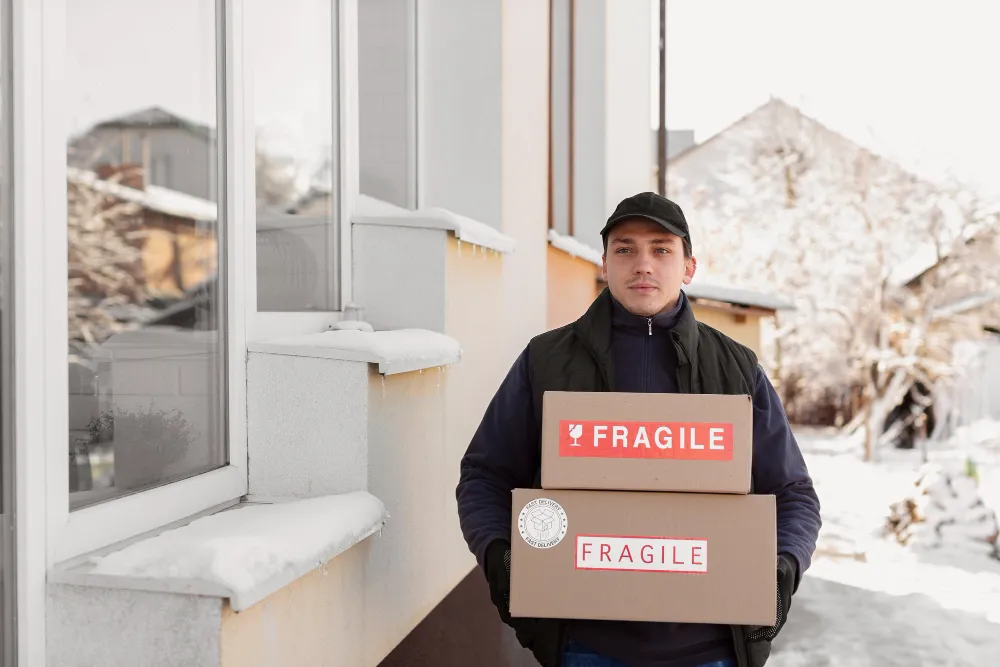
Write “FRAGILE” on three sides of the box. Not just the top – boxes get turned during loading.
What NOT to Pack Yourself
Some things are just too risky:
- Antiques worth more than £1,000
- Large mirrors
- Chandeliers or complex lighting
- Musical instruments
For these, get professional packing services. Trust me, the insurance alone is worth it.
Dubai Climate Considerations
If you’re moving from Dubai’s heat to somewhere cooler: Temperature changes make materials expand and contract. Add extra padding for temperature-sensitive items like wooden furniture or musical instruments.
Common Mistakes (And How to Avoid Them)
Mistake 1: Using boxes that are too big for heavy fragiles Solution: Small boxes for heavy/fragile, large boxes for light/bulky
Mistake 2: Packing fragiles the day before moving Solution: Pack fragiles first, when you’re fresh and focused
Mistake 3: Not testing your packing Solution: Gently shake every box before sealing
FAQs
Q: How much bubble wrap do I actually need? A: For long-distance moves, budget 1 roll per 10-15 fragile items. Better to have too much than too little.
Q: Can I use towels and clothes as padding? A: Yes, but only as secondary padding. Professional materials work better for valuable items.
Q: Should I take photos of expensive items before packing? A: Absolutely. Document condition before packing for insurance purposes.
Q: What’s the weight limit for fragile item boxes? A: Maximum 20kg (44lbs). Your back and the movers will thank you.
Q: How far in advance should I start packing fragiles? A: Start 2-3 weeks before moving day. Don’t rush this process.
Remember, how to pack fragile items for long distance moving isn’t just about materials – it’s about taking your time and doing it right the first time.