How to Pack Kitchen Items Safely for Moving
The kitchen is consistently the room where the most breakages happen during a move — not because it's packed last, but because plates and glassware get packed the way people pack books: stacked flat, with padding as an afterthought.
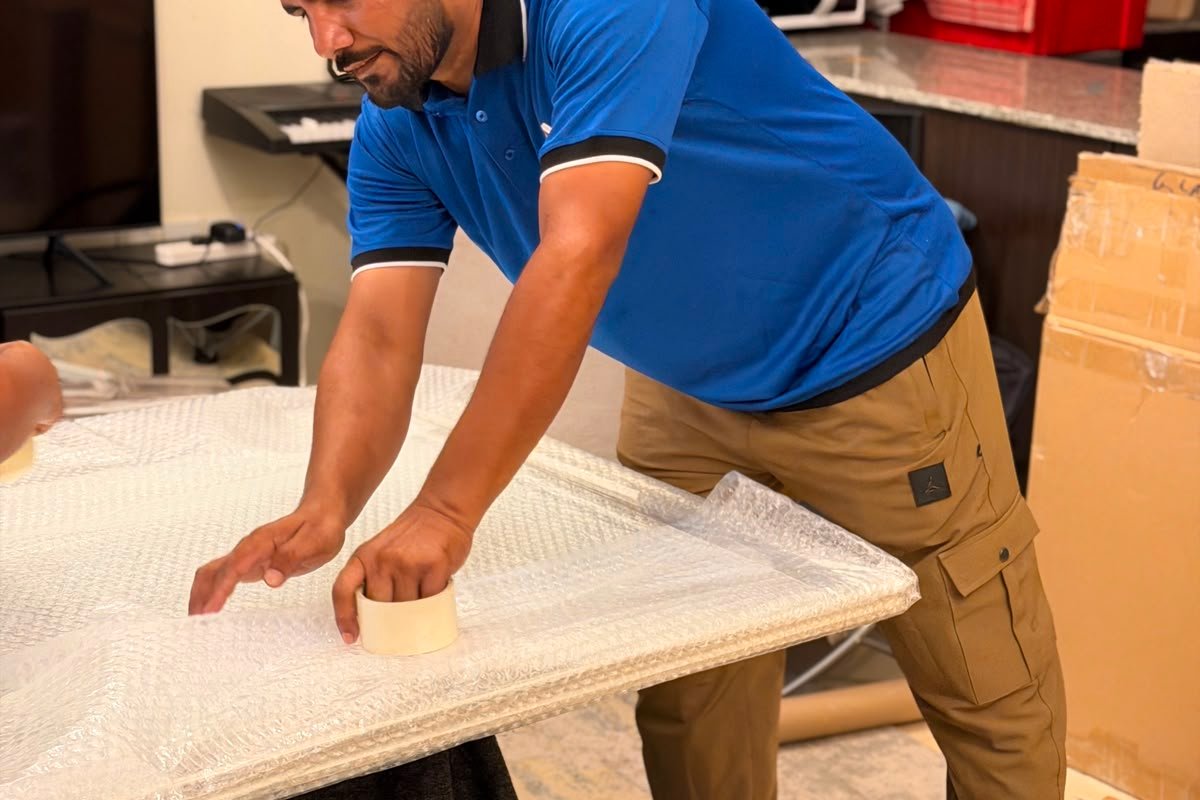
Get the Right Materials Before You Start
Dish-pack (or "cell") boxes with built-in cardboard dividers make the biggest difference for glassware and stemware — a plain box with newspaper padding is a distant second choice. Beyond that, you'll want packing paper (plain newsprint is fine and won't transfer ink like printed newspaper can onto light-colored dishes), bubble wrap for appliances and anything with a delicate finish, and packing tape that's actually rated for box sealing rather than household tape.
Plates and Bowls: Pack Them on Their Edge
The single most common kitchen-packing mistake is stacking plates flat, the way they sit in a cupboard. Flat-stacked plates concentrate the full weight of the stack onto the plate at the bottom, and any small impact travels straight through the stack — that's how a whole stack cracks from one bump.
Instead, wrap each plate individually in packing paper, then pack them standing on their edge, like records in a crate. A stack packed this way distributes impact across the edge of each plate rather than through the flat face, which is dramatically more resistant to cracking. Bowls should be wrapped individually and nested no more than two or three deep.
Glassware and Stemware: Individual Wrap, No Contact
Every glass and stemware piece should be individually wrapped, with extra paper stuffed inside the glass itself for stemware and delicate rims — an unsupported rim is the most common breakage point. Use a dish-pack box's built-in cells so glasses never make contact with each other, and don't overload the box past the point where you can still close the lid without pressing down.
Small Appliances: Original Boxes First, Bubble Wrap Second
If you kept the original box for a stand mixer, coffee machine, or similar appliance, use it — it was designed specifically for that item's weight distribution. Without the original box, wrap the appliance body in bubble wrap, secure loose cords with a twist tie or velcro strap rather than letting them dangle, and pack any small detachable parts (blades, attachments) separately and clearly labeled so they aren't mistaken for packing material and discarded.
Knives and Sharp Utensils: Protect the Blade, Not Just Wrap It
Wrapping a knife in paper alone doesn't stop it from cutting through the wrap or the box during transport. Slide each blade into a cardboard sleeve (cut from a spare box) or wrap it thickly in a dish towel secured with tape before adding paper on top, and mark the box clearly as containing sharp items — this matters for whoever unpacks it as much as whoever is carrying it.
Pantry Items: What Travels and What Doesn't
Sealed, unopened, non-perishable items generally travel fine in a sturdy box — but this is also a good moment to check expiry dates and skip anything you were unlikely to use anyway. Opened items (flour, sugar, spices) are more prone to spilling; either tape the lid or transfer to a sealed container before packing. Frozen and refrigerated items should be used up in your final days rather than packed at all — see our full moving checklist for the wider timeline this fits into.
Labeling and Loading Order
Mark every kitchen box "Fragile," "This Side Up," and with a general contents note — not just "Kitchen." On moving day, heavier boxes (dishes, small appliances) should be loaded low and glassware boxes on top, never underneath something heavier. This is exactly the kind of detail a trained moving crew manages automatically, but it's worth confirming if you're packing boxes yourself for movers to load.
Key Takeaways
- Pack plates standing on their edge, not stacked flat — it's the single biggest change that prevents cracking.
- Use dish-pack boxes with built-in cell dividers for glassware whenever possible; a plain box is a distant second choice.
- Protect knife blades with a cardboard sleeve or thick towel wrap, not just paper.
- Use original boxes for appliances when you have them; otherwise bubble-wrap the body and secure loose cords.
- Label every kitchen box "Fragile" with a specific contents note, and load glassware boxes on top, never underneath.